Corporate hypnosis is hypnosis brought to a workplace for a wellness or performance goal: lower stress, steadier focus, more confidence under pressure. It is not the comedy show you may have seen at a company party. It is a guided, consent-based session, led by a trained practitioner, for a group or a whole team. We deliver this through our corporate and group programs, which combine hypnosis with life coaching so that what a team practices in the room carries into the workday.
TL;DR
- Corporate hypnosis means guided, goal-focused hypnosis for teams, such as stress, focus or performance. Stage hypnosis is entertainment and works differently.
- A structured group format is how most research tests it. One German trial used five weekly 120-minute sessions plus audio practice at home and found lower perceived stress.
- Safe use means informed consent, clear confidentiality terms, a trained provider and a clear understanding that hypnosis sits alongside medical care, not in place of it.
- Per-person session costs in the U.S. commonly run from $75 to $250 or more. Group and on-site work is quoted for your team’s size and goals.
- Pairing hypnosis with coaching gives employees something to do with the calm and focus they build.
Table of Contents
- What corporate hypnosis actually is
- What goals it can support
- What the research says about group hypnosis
- How a corporate session works
- Consent, privacy and safe use
- Choosing the right program for your team
- What corporate hypnosis costs
- Our corporate and group programs
- Our perspective
- FAQ
- Sources
What corporate hypnosis actually is
The Society of Psychological Hypnosis, which is Division 30 of the American Psychological Association, defines hypnosis as a state of focused attention and reduced peripheral awareness with an enhanced capacity to respond to suggestion. Nothing in that definition involves losing control. Cleveland Clinic describes it as a complementary approach used alongside typical medical or psychological treatments, and says it is not mind control: any change comes from the person choosing to make it.
That is the first thing to tell a team before a session. People attend because they want something specific, such as less tension before a presentation, better sleep during a heavy quarter or a calmer response to a difficult client call. The practitioner guides them into a relaxed, focused state and works with suggestions built around that goal.
How it differs from stage hypnosis
When most people hear “hypnosis at work,” they picture an entertainer. The two are different services with different aims.
| Stage or event hypnosis | Corporate wellness hypnosis | |
|---|---|---|
| Purpose | Entertainment | Stress, focus, confidence, performance |
| Who takes part | Volunteers picked on stage | Anyone on the team who opts in |
| Content | Comedy routines | Goal-based suggestions and skills practice |
| Follow-up | None | Practice tools and, where useful, coaching |
The American Society of Clinical Hypnosis (ASCH) notes that stage hypnotists screen volunteers for cooperation and responsiveness, and that stage acts help create a myth that discourages people from seeking legitimate hypnotherapy. A wellness session has no such screening. It is designed so that the whole group can benefit.
What goals it can support
The goals teams bring to us fall into a few groups.
- Stress and tension. The most common request, especially around deadlines, reorganizations and busy seasons.
- Focus and confidence. Public speaking, sales calls, leadership moments. This overlaps with performance work, the same approach we use in sport hypnosis for peak performance.
- Sense of meaning at work. A 2026 report from Universitas Gadjah Mada described a small pilot of 31 university administrative staff in Indonesia, in which two guided-imagery hypnosis sessions improved positive meaning and meaning-making. The authors called the findings preliminary and wanted larger samples.
- Sleep and recovery. Poor sleep is a quiet drain on any team. See our page on insomnia hypnosis for how that works.
- Fears and phobias. Fear of flying before a business trip, or fear of speaking up in meetings, can be worked on in a group setting or in private follow-up.
What the research says about group hypnosis
The best-known workplace-relevant evidence comes from a 2020 randomized multicenter trial in Germany. It enrolled 95 adults with elevated perceived stress and compared five weekly 120-minute group hypnosis sessions, plus home audio practice and a booklet, against the booklet alone. Perceived stress was lower after the five sessions, and a smaller difference between the groups was still present at 12 weeks.
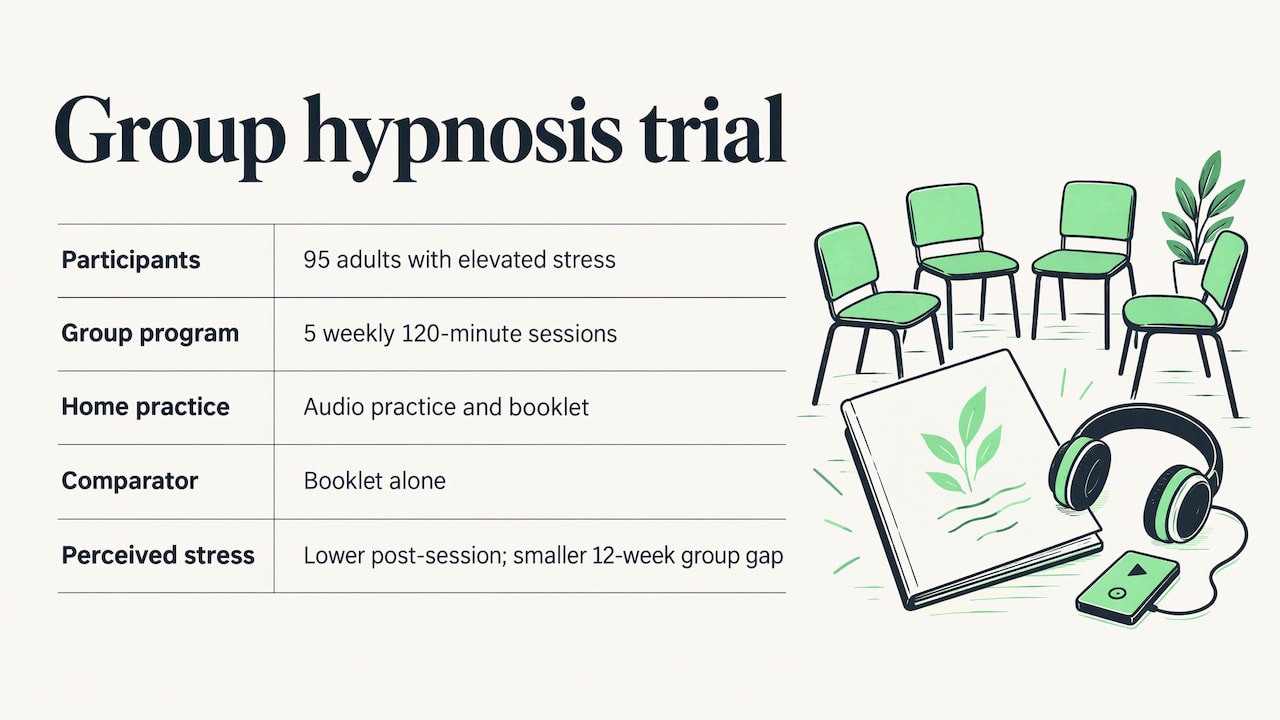
Two details from that trial matter for any employer. The format was a group program, not a one-off talk. And participants practiced at home with recordings, which is why a good corporate program ends with tools people can use alone.
The wider picture is broad. An overview of 49 meta-analyses covering 261 primary studies found the most robust hypnosis evidence in medical procedures and pain. The National Center for Complementary and Integrative Health states that hypnosis is a safe technique when practiced by a trained, experienced, licensed health care provider. Safe delivery is the point we return to below.
Many teams also add small daily habits around a program, such as an evening wind-down routine with calming tea for stress. The session sets the skill, and the routine makes it easier to repeat.
How a corporate session works
Formats vary with the goal, but the structure is consistent.
- Goal setting. Before anyone is in a room, we define what the team wants: less stress, better presentations, steadier focus. This shapes the language used in the session.
- Education. A short explanation of how stress works and what hypnosis is and is not. This removes myths and makes consent real.
- Guided hypnosis. The practitioner leads the group into a relaxed, focused state and uses suggestions tied to the goal. Participants stay aware throughout and can open their eyes whenever they choose.
- Discussion. A short debrief where people describe what they noticed.
- Practice tools. A recording or script to use between sessions.
This mirrors what research programs do. In the German trial, groups of 8 to 12 met weekly and the program used health education, hypnotic inductions, therapeutic talk and take-home audio recordings, led by certified hypnotherapists. A U.S. integrative-medicine clinic described an eight-week group protocol for chronic pain with groups of roughly 7 to 15, 90-minute meetings and self-hypnosis practice between sessions. The pattern is the same: teach, guide, discuss, then practice.
For a team, that can mean one introductory workshop, a short series, or a workshop followed by individual sessions for people who want to go further. We offer both in-person and online delivery, and for California companies we run on-site corporate wellness workshops.
Where coaching fits
Hypnosis builds a state of calm focus. Coaching turns that state into decisions: how to prepare for a hard conversation, how to plan a workload, how to hold a new habit. Our approach joins the two through customized plans and strategic planning, which is why we offer hypnosis life coaching as its own service. If you are unsure which suits an individual, our guide to coaching versus therapy explains the difference.
Consent, privacy and safe use
A workplace adds questions a private session does not. Participation must be voluntary, and people should know who sees what.
The American Psychological Association’s Ethics Code, which covers psychologists’ organizational consulting, asks for informed consent in assessment, therapy, counseling or consulting services. Its Standard 3.11 says that when services are delivered to or through organizations, the provider should explain in advance the nature and objectives of the service, who the clients are, how information will be used and the limits of confidentiality. Whatever the provider’s profession, that is a good standard for any employer to hold.
In practice, that means:
- Opt-in only. Nobody is required to attend, and nobody is asked why they skipped.
- No individual reporting. The employer receives group-level feedback, not what any person shared or experienced.
- Plain explanation first. Participants hear what will happen before it does.
- Easy exit. Anyone can stop at any point.
Hypnosis alongside, not instead of, health care
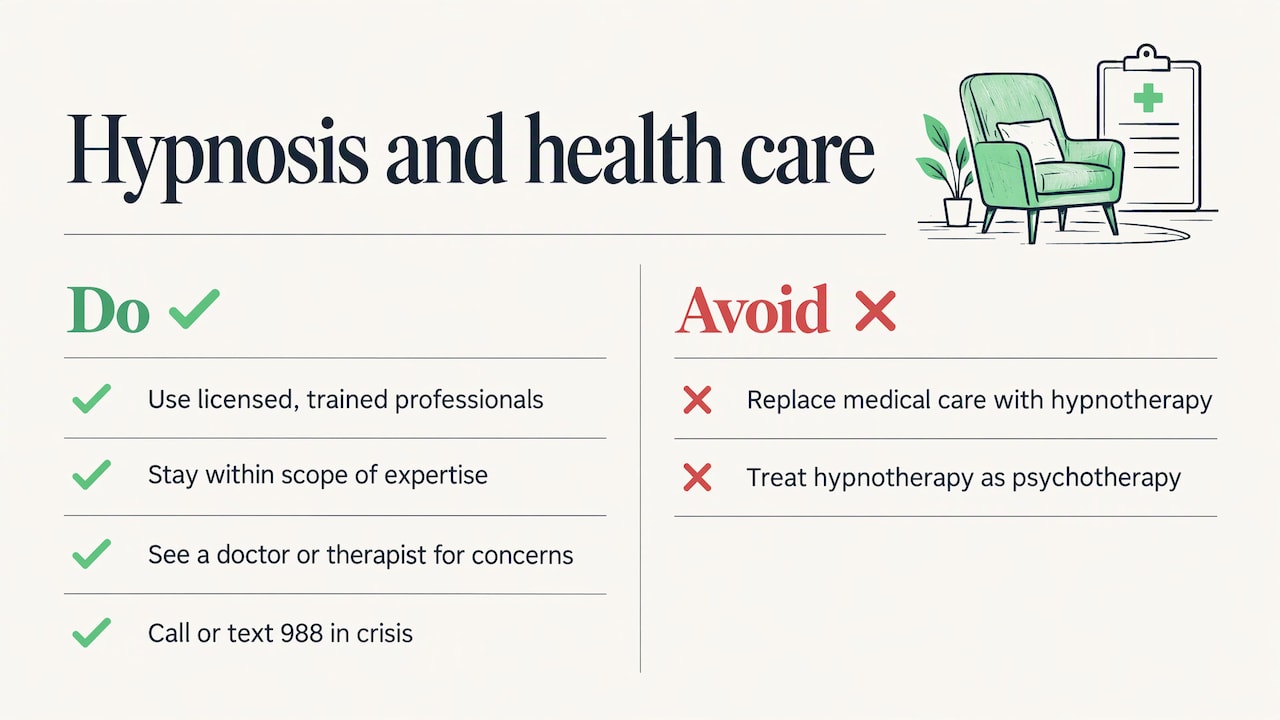
A wellness session is not treatment for a medical or psychiatric condition. Winchester Hospital notes that hypnotherapy is not a replacement for medical care or a form of psychotherapy, and that people dealing with depression, thoughts of harm or PTSD should seek more comprehensive support, such as a regular talk therapist, with hypnotherapy added alongside if appropriate. Anyone in crisis should call or text 988, the Suicide and Crisis Lifeline, or contact their doctor.
The American Psychiatric Association’s position statement says hypnosis should be used by professionals with appropriate licensure and training, within their scope of expertise, and that its induction and termination should be clearly structured. We work with that in mind and support clients who are also seeing a doctor or therapist; our page on combining hypnotherapy with traditional healthcare explains how.
Choosing the right program for your team
Start from the goal, not the technique. A few questions help.
- What do you want to change? “Less stress before quarter-end” is a program. “Make everyone happier” is not.
- Who is it for? A leadership group, a sales team and a full department each need different language and pacing.
- How long? A single workshop introduces the skill. A series, in the pattern the research programs use, gives people time to practice between meetings.
- How will people practice? Look for take-home recordings or scripts.
- Where does it happen? On-site suits a shared room. Online suits remote and hybrid teams.
ASCH’s consumer guidance recommends a provider who is trained, licensed and credentialed in a health care field, with additional hypnosis training. ASCH also notes that few, if any, state laws regulate the practice of hypnosis in the U.S., which is why the clarity of a provider’s approach to consent and scope matters when you commission a program.
What corporate hypnosis costs
Per-person hypnosis sessions in the U.S. commonly cost $75 to $250 or more, depending on provider experience and location, and often last about an hour. Group and corporate work is priced differently, because the cost depends on team size, number of sessions and whether the work is on-site or online. We do not publish a corporate rate, since each program is built around the team. You can see our individual rates on the hypnotherapy pricing page and request a quote for a group through the corporate page.
Our corporate and group programs
MindShift Hypnosis offers corporate and group hypnosis with life coaching for teams that want personal development, stress relief and stronger performance. Programs are customized, in person or online, and can sit alongside the wider services we offer individuals, couples and families.
To plan a program, start with the corporate and group page or browse all MindShift services.
Our perspective
Teams rarely need more motivation talks. They need a way to get calm and focused when it counts, and a plan to keep doing it.
That is why we pair hypnosis with life coaching. Hypnosis helps a person reach a settled, focused state. Coaching and strategic planning give that state a direction: which habit to build, which conversation to prepare, which pressure to handle differently.
We also believe a good workplace session respects the individual. Every program is customized, participation is a choice, and people are treated as capable adults who decide what changes for them. When someone wants more, we offer one-on-one work, and when someone is also seeing a doctor or therapist, we work alongside that care.
The result we care about is simple: people who leave the room with a skill they can use on Monday.
Rachael
FAQ
Is corporate hypnosis the same as a hypnosis show?
No. A show is entertainment built around volunteers on stage. Corporate hypnosis is a goal-based session for an opt-in group, focused on things like stress, focus or confidence, and it usually includes tools to practice afterward.
Can hypnosis help with workplace stress?
In a 2020 German trial, adults with elevated perceived stress who attended five weekly group hypnosis sessions with home audio practice reported lower perceived stress than those who received a booklet alone. Results in any workplace depend on the people, the goal and the follow-through.
How long does a corporate session last?
It depends on the format. The German trial used 120-minute weekly sessions, and a U.S. clinic program used 90-minute meetings. A workshop can be shorter, and a series can run over several weeks with practice in between.
Is hypnosis a substitute for therapy?
No. Hypnosis is a complementary approach used alongside medical or psychological care. If someone is dealing with depression, PTSD or thoughts of self-harm, they should see a doctor or licensed therapist, and hypnosis can be added alongside that care where appropriate.
Sources
- About Hypnosis, ASCH
- ASCH Questions and Answers
- Group hypnosis for stress reduction and improved stress coping, PMC
- Meta-analytic evidence on the efficacy of hypnosis, PMC
- Clinical Hypnosis for Chronic Pain in Outpatient Care, PMC
- NCCIH: Mind and Body Approaches for Stress and Anxiety
- UGM Psychology: Hypnosis and meaning at work
- APA Ethics Code
- American Psychiatric Association Position Statement on Hypnosis
- Hypnotherapy, Winchester Hospital
- Hypnosis, Cleveland Clinic
- Hypnosis: Complementary therapy, Living Beyond Breast Cancer