
Hypnosis for childhood trauma is a guided, focused state of relaxation in which a trained practitioner helps you feel safe enough to work with painful memories, beliefs and body reactions at a pace you control. You stay aware and in charge the whole time. Done well, it is paced, collaborative and built around your safety, and it can sit alongside therapy or medical care you already have. At MindShift Hypnosis we offer hypnotherapy for trauma and PTSD, in person and online, combined with life coaching and strategic planning when you want to turn relief into change.
This guide explains what happens in a session, what the research says, how to stay safe, and how to choose someone qualified. It also covers past trauma in general and birth trauma.
TL;DR
- Hypnosis is a state of deep relaxation and focused attention guided by a trained practitioner. Most people remember the session and stay in control, according to Cleveland Clinic.
- Trauma work with hypnosis starts with safety and stabilization, not with digging up memories. Approaches often use metaphor and imagery to create emotional distance from what happened.
- Research on hypnosis-based treatment for trauma symptoms is encouraging, and clinicians describe it as a good partner to established trauma therapies.
- Good practice means open-ended questions, informed consent and no pressure to “recover” memories.
- Ask any practitioner about training, scope and how they work with your doctor or therapist before you begin.
Table of Contents
- What hypnosis is, and what it is not
- Why hypnosis is used for childhood trauma
- What a trauma-focused session looks like
- What the research shows
- Hypnosis alongside established trauma therapies
- Memory, consent and how to keep the work safe
- Hypnosis for past trauma beyond childhood
- Birth trauma and hypnosis
- How to choose a qualified practitioner
- Promo: working with MindShift Hypnosis
- Our perspective
- FAQ
- Sources
What hypnosis is, and what it is not
Cleveland Clinic describes hypnosis as a state of deep relaxation and focused concentration, a complementary therapy guided by a trained, certified practitioner. A session moves through four stages: induction (settling in), deepening, suggestions, and emergence (coming back to full alertness). Most people remember what happened and stay in control throughout.
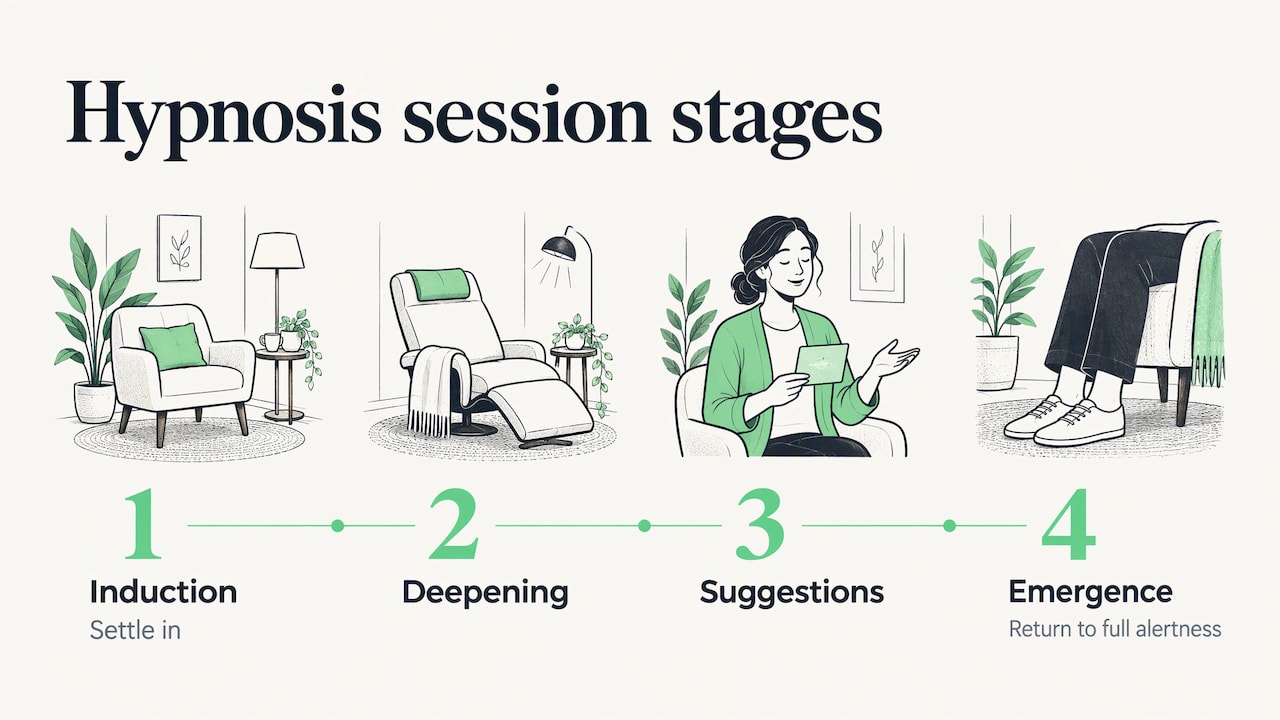
That last point matters for trauma. Hypnosis is not a trance in which someone takes over your mind, and you cannot be made to say or relive anything you do not choose to. The state resembles the absorbed focus of a good book or a long drive. What the practitioner adds is structure: a calm setting, a clear pace and suggestions designed around your goals.
Why hypnosis is used for childhood trauma
Childhood trauma is rarely one clear memory. It is often a pattern: a body that stays on alert, a harsh inner voice, trouble trusting, a sense of being unsafe in calm moments. Talking about it can be hard because the story itself is overwhelming. Hypnosis offers a different route in. It helps the nervous system settle first, and then it lets you approach the material through imagery, metaphor and gentle suggestion rather than a blow-by-blow retelling.
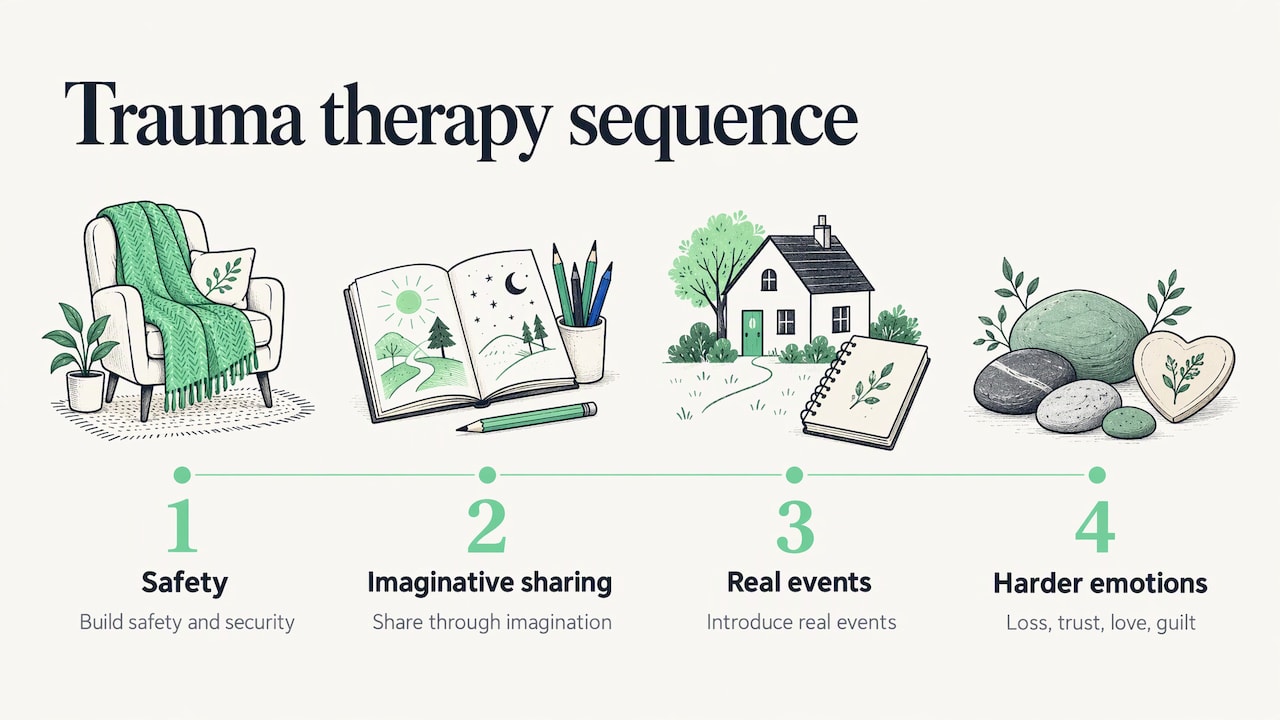
This is not a new idea. A stepwise hypnotherapeutic program described by Rhue and Lynn for children who had been sexually abused used storytelling. It moved from building safety and security, to imaginative sharing, to introducing real events, to the harder emotions of loss, trust, love and guilt. Comforting suggestions, symbolism and metaphor gave the child emotional distance from the trauma. The same logic of safety first, distance second, meaning third underlies most careful trauma work with adults.
Inner child work
Many people searching this topic have come across “inner child” sessions. In practice, this means using imagery to meet the younger version of yourself with the care that child needed and did not get. It can be a gentle way to change how you speak to yourself and how your body reacts to reminders. A practitioner should still keep the work grounded in the present: you are an adult, you are safe now, and you can stop at any time.
What a trauma-focused session looks like
Every practitioner works differently, but a careful process tends to follow this order.
- A conversation first. You talk through what you want to change, your history with therapy or medication, and anything that feels unsafe. Trauma sessions should never begin cold with an induction.
- Building safety. You learn to settle your body and set up a mental “safe place” or similar resource. This is stabilization, and it can take most of the early sessions.
- Choosing a pace. You agree on signals for “slow down” and “stop,” and you decide how much detail, if any, you want to share.
- Working with the effects, not only the events. Suggestions and imagery target the reactions you want to change: hypervigilance, shame, startle responses, sleep trouble, avoidance.
- Coming back and closing. Emergence is gradual, and the session ends with grounding and a plan for what to do between sessions.
There is no need to remember or retell the worst moments for this to be useful. If you want a closer look at how we approach it, our page on hypnosis for trauma and PTSD explains what we work on.
What the research shows
Studies on hypnosis for trauma are still a growing field, but several findings are worth knowing.
- A meta-analysis of hypnotherapy for PTSD symptoms found large effects favoring hypnosis-based treatment right after treatment (d = 1.17) and at four weeks (d = 1.58). In plain terms, people receiving hypnosis-based treatment improved substantially more than comparison groups.
- A 2022 randomized study of 29 adults with childhood-trauma-related PTSD found that spiritual-hypnosis-assisted therapy reduced PTSD symptoms significantly more than the medication fluoxetine, while both groups showed similar cortisol reductions.
- A 2020 case series in the American Journal of Clinical Hypnosis followed four children with early stress reactions after a car accident. All improved after one or several sessions of early hypnotherapy.
Notice that these studies mostly measure trauma symptoms: intrusive thoughts, arousal, avoidance, mood. That is also how we suggest you think about your own goals. The aim is less reactivity and more freedom in daily life.
Hypnosis alongside established trauma therapies
Trauma treatment is not either/or. A 2025 article in the American Journal of Clinical Hypnosis by Tanev and Daitch lists Prolonged Exposure, Cognitive Processing Therapy, EMDR (eye movement desensitization and reprocessing) and medication as evidence-based PTSD treatments. It describes hypnosis as a state-based approach that can move people into calm, lower emotional reactivity, help change unhelpful beliefs, and magnify the effects of CBT approaches such as Prolonged Exposure and Cognitive Processing Therapy.
A similar division of labor appears in clinical writing on EMDR. Harford’s integrative article proposes that hypnosis mainly improves access to difficult material and stabilization, while EMDR handles reprocessing. It also notes that deep trance during EMDR processing may not suit every client, and that lighter trance work can help stabilize people with dissociative symptoms. That is why coordination matters: if you already see a therapist or psychiatrist, tell them about your hypnosis work and tell your hypnotherapist about their plan. We work this way by design, and you can read how in our page on combining hypnotherapy with traditional healthcare.
If you live with diagnosed PTSD, severe dissociation, suicidal thoughts or are in crisis, your doctor or a licensed mental-health clinician should be part of your care. In the US, you can call or text 988, the Suicide & Crisis Lifeline, at any hour.
Memory, consent and how to keep the work safe
The most serious concern about hypnosis and trauma is memory. Hypnosis does not work like a video recorder, and a vivid image in a session is not proof of an event. Research reviewed by Lindsay and Read found that hypnosis and age regression do not in themselves improve accuracy of recall, and that risk of illusory memories rises when a trusted authority insists hidden memories exist and keeps suggesting them.
The practical rules that follow are simple:
- Open-ended questions only. Eimer’s guidance names inappropriate leading, where a practitioner forms a theory about the cause of your problems and uses regression to confirm it, as a major source of false memories. Open questions and ideomotor signals (small finger responses) are safer.
- No memory hunting. A trauma-informed session works with how you feel and function now. It does not require you to “find” anything.
- Informed consent about legal matters. Harford notes that in some U.S. jurisdictions, using hypnosis can interfere with a person’s ability to take legal action against a perpetrator. If a legal case is possible, talk with an attorney before any hypnosis begins.
- Know the common side effects. Cleveland Clinic lists dizziness, drowsiness, headaches, increased anxiety and trouble sleeping. It advises telling the hypnotherapist about side effects or negative feelings, and contacting your regular healthcare provider about new or different symptoms.
If you feel flooded during a session, say so. A good practitioner slows down, grounds you and adjusts the plan.
Hypnosis for past trauma beyond childhood
The same principles apply to trauma from any period of life: accidents, loss, assault, medical events, a difficult relationship. Past trauma often shows up as fears and phobias, sleep problems, nightmares, anxiety or depression, relationship patterns, or a performance block. These are areas we work in, and they connect to other pages on our site, including hypnosis for nightmares, insomnia hypnosis and hypnotherapy for depression.
When trauma touches closeness and the body, some people also look for body-aware approaches to intimate and sexual difficulties, such as body-focused sexual counseling, alongside their mental-health care. Which route fits depends on what feels safe to you.
Birth trauma and hypnosis
Birth trauma means a delivery that left you frightened, helpless or haunted by what happened. Research on hypnosis around birth is mostly about preparation. A 2024 systematic review of seven high-quality randomized trials found that hypnotherapy during childbirth preparation reduced fear and pain in labor and improved the overall birth experience.
For someone processing a past birth, the same skills apply: calming the body, changing the images and beliefs attached to the memory, and rebuilding a sense of safety. If you are postpartum and struggling with low mood, panic or intrusive memories, tell your obstetric provider or doctor too, so your care team knows. Hypnosis can be part of that wider support.
How to choose a qualified practitioner
There is limited direct regulation of hypnosis as such in many U.S. states, so the title “hypnotherapist” tells you less than you might hope. The American Society of Clinical Hypnosis advises you to ask about a practitioner’s training, experience and professional background, such as medicine, psychology or social work, and to be wary of sensational claims and guarantees. Use this checklist.
| Ask | A good answer sounds like |
|---|---|
| What is your training in trauma work? | Specific training, ongoing education and clear limits on what they treat |
| How do you start with trauma clients? | Assessment, safety and stabilization before any deeper work |
| Do you ever ask me to recover memories? | No. Open-ended questions, no leading, your pace |
| How do you work with my doctor or therapist? | Willing to coordinate, with your permission |
| What will you not promise? | No guaranteed cures or outcomes |
| How do I stop or pause? | A clear signal and a plan for hard moments |
A practitioner who is comfortable with these questions is usually one you can trust.
Promo: working with MindShift Hypnosis
Our services include hypnotherapy for trauma and PTSD, depression and anxiety, fears and phobias, relationship needs, and life coaching for individuals, couples, families, groups and corporate teams. Sessions are available in person and online, and we build a customized plan around your goals, combining hypnotherapy with life coaching and strategic planning. We also work with performers and athletes whose past experiences affect how they perform.
See all of our services, check pricing, or start from our home page to book.
Our perspective
Most people who come to us about childhood trauma are not asking for a dramatic breakthrough. They want their nights to be quieter, their reactions to be smaller, and their relationships to feel safer. We start there.
We believe trauma work should be customized. Two people with similar histories may need very different things: one needs calm and sleep first, another needs help with a phobia or with how they show up in a marriage. That is why we combine hypnotherapy with life coaching and planning, so that relief in the session turns into change in daily life.
We also believe hypnosis works best as part of a whole picture of care. We encourage clients to keep their doctor or therapist informed, and we design our work to fit alongside traditional healthcare. Your pace, your consent and your sense of safety come first, every session.
Rachael
FAQ
Can hypnosis help with childhood trauma?
Hypnosis is used to help people settle their nervous system, change distressing beliefs and lessen reactions linked to past events. Studies of hypnosis-based treatment for PTSD symptoms report large improvements. Results vary by person, so a good practitioner sets goals with you and reviews progress.
Will I have to relive what happened?
No. Careful trauma work builds safety first and often uses metaphor and imagery so you can work with the effects of trauma without retelling it in detail. You decide how much to share, and you can stop at any time.
Is hypnosis safe for trauma?
Cleveland Clinic says hypnosis is safe when provided by a trained, certified practitioner. Possible side effects include dizziness, drowsiness, headaches, increased anxiety and trouble sleeping. Tell your hypnotherapist about any negative feelings, and contact your regular healthcare provider about new or different symptoms.
Can I combine hypnosis with therapy or medication?
Yes, and clinicians often describe hypnosis as a complement to established approaches such as CBT-based trauma therapies and EMDR. Keep every provider informed, and do not change or stop medication without your prescriber.
Is online hypnosis as useful as in-person sessions?
Many people do well online because they can settle in at home, and we offer both formats. Choose the one where you feel safest, and make sure you have a private, quiet space.
Sources
- Hypnosis: What It Is, How It Works, Benefits & Risks (Cleveland Clinic)
- Storytelling, hypnosis and the treatment of sexually abused children (PubMed, 1991)
- A Meta-Analysis for the Efficacy of Hypnotherapy in Alleviating PTSD Symptoms
- The biobehavioural effectiveness of spiritual hypnosis-assisted therapy (2022)
- Early Hypnotic Intervention After Traumatic Events in Children (2020)
- Hypnosis applications to the treatment of posttraumatic stress (2025)
- The Integrative Use of EMDR and Clinical Hypnosis (Harford, 2010)
- Memory Work and Recovered Memories of Childhood Sexual Abuse (Lindsay and Read, 1995)
- Inadvertent Adverse Consequences of Clinical and Forensic Hypnosis (Eimer, 2012)
- Impact of Hypnotherapy on Fear, Pain, and the Birth Experience (2024)
- Selecting a Qualified Professional (American Society of Clinical Hypnosis)
- Sexualberatung: Verborgene Herausforderungen verstehen und annehmen