Hypnosis can reduce anxiety and improve comfort during needle procedures for many people, and short self-hypnosis routines can be used immediately at the clinic. It is not a guaranteed fix, and evidence is promising but mixed, so pairing it with proven safety measures matters. If you have a severe fear or a history of fainting, practice a brief self-hypnosis technique beforehand and tell clinical staff before the needle comes out.
TL;DR:
- A review of 59 trials found hypnosis, distraction, breathing, and combined CBT can reduce children’s distress, but evidence quality was low to very low.
- Hypnosis appears more reliable for easing anxiety than pain; one randomized trial reduced anxiety and staff stress but did not consistently lower pain scores.
- Practice the one to three minute routine at home at least ten times, pairing a steady anchor phrase with switch imagery before your appointment.
- If you have fainted around needles, tell clinical staff beforehand, pair imagery with applied muscle tension, and remain seated or lying down briefly afterward.
Table of Contents
- How hypnosis works for needle fear
- What the research says: systematic reviews, trials, and limitations
- What to expect in a hypnotherapy session for needle phobia
- A short self-hypnosis script and step-by-step technique to use at the clinic
- Complementary strategies to pair with hypnosis
- MindShift Hypnosis perspective on treating needle phobia
- What the evidence actually tells us to prioritize
- Ready to try clinic-guided hypnosis? How to book and what to ask
- FAQ
- Sources
How hypnosis works for needle fear
Hypnosis for needle phobia rests on a handful of specific techniques rather than a vague trance state. Hypnotic relaxation lowers physical tension and slows breathing, which interrupts the stress response that makes needles feel unbearable. Guided imagery gives your mind something concrete to do instead of fixating on the needle itself.
Two techniques show up often in clinical use:
- Switch-wire imagery: you picture a dial or switch that controls sensation, then mentally turn it down during the injection.
- Dissociation imagery: you imagine watching the procedure from a short distance, keeping your attention one step removed from the sensation.
What matters most is that hypnosis is something you do, not something done to you. A clinician guides the process, but you practice the skill, rehearse it, and apply it yourself in the moment. Clinical practice research describes hypnosis as an active, collaborative skill that patients strengthen through repetition outside of sessions, not a one-time fix delivered by someone else.
There is also a language effect worth knowing about. A recent randomized trial on hypnotic communication during invasive procedures found that the words clinicians use, calm and reassuring versus neutral or alarming, measurably changed patient anxiety, even when pain scores stayed similar. That suggests part of hypnosis’s value comes from how suggestion itself shapes the nervous system’s response, separate from any formal induction.
What the research says: systematic reviews, trials, and limitations
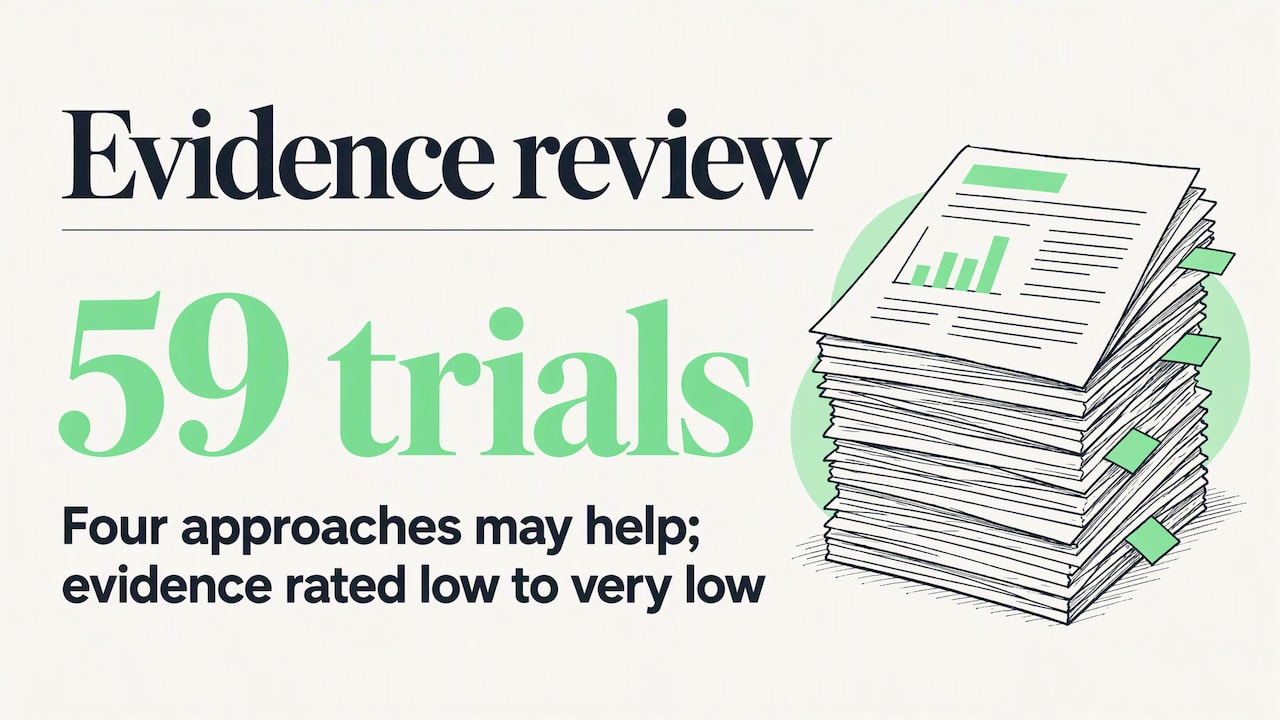
The honest summary is that hypnosis helps many people feel less anxious and more in control, but the evidence base is not airtight. A systematic review of psychological interventions for needle-related pain and distress in children covering 59 trials found that distraction, hypnosis, combined CBT approaches, and breathing techniques can reduce pain or distress, but rated the supporting evidence as low to very low quality.
That is not the same as saying hypnosis does not work. It means trials vary widely in design, population, and how outcomes get measured, which makes pooling results into one confident number difficult. A broader review of hypnosis in clinical practice echoes this: some trials show real reductions in anxiety and improved comfort, but results are heterogeneous depending on study design and who is being studied, children versus adults, routine blood draws versus more invasive procedures.
A recent randomized trial found hypnotic communication reduced patient anxiety and staff stress during unplanned invasive procedures, though it did not always lower pain scores, and it reduced the need for supplemental lidocaine. That pattern, where anxiety drops reliably even when pain relief is modest, shows up across several studies and suggests hypnosis’s clearest value may be psychological rather than purely analgesic.
On the safety side, exposure-based interventions and applied tension have separate evidence showing they reduce fainting risk in people with severe needle fear, a different mechanism from hypnosis but one that pairs well with it. Bigger, better-controlled trials are still needed before anyone can call hypnosis a proven standard treatment for needle phobia, but the direction of the evidence is consistently positive enough to justify trying it alongside other tactics.
What to expect in a hypnotherapy session for needle phobia
A session built around needle fear usually starts with figuring out what is actually driving yours. Fear of pain, fear of losing control, and fear of blood or fainting call for different techniques, so a thorough assessment comes first.
- Assessment: your hypnotherapist asks about your specific triggers, past experiences, and whether you have ever fainted or felt dizzy around needles.
- Induction and imagery: a short relaxation induction leads into targeted imagery, such as switch-wire or dial techniques, matched to your fear drivers.
- Rehearsal: you practice applying the technique in session, often picturing the actual procedure you are preparing for.
- Homework: many practitioners provide a recording or written script so you can rehearse self-hypnosis between sessions.
Pro Tip: Ask for a take-home recording even if you feel confident after one session. Rehearsing the same imagery repeatedly is what makes it reliable under real stress.
A single focused session sometimes helps people with mild, situational fear. A more entrenched phobia typically benefits from a short course, often two to six sessions, building the skill gradually. If avoidance keeps interfering with needed medical care despite this work, exposure-based therapy is a reasonable next step, sometimes combined with hypnosis rather than instead of it.
A short self-hypnosis script and step-by-step technique to use at the clinic
You do not need a hypnotherapist in the room to use a basic version of this technique during an actual appointment, but you do need to rehearse it beforehand at home, several times, so it feels familiar rather than new under stress. Pick a short anchor phrase or a small physical gesture, like pressing your thumb and finger together, that you will use consistently so your mind links it to calm.
- Settle in: ask staff for a quiet moment before they start, and sit or lie down comfortably.
- Breathe: take three slow breaths, counting four seconds in and six seconds out.
- Induce: silently repeat your anchor phrase while letting your shoulders and jaw soften.
- Imagine: picture your dial or switch, and mentally turn the sensation down as the needle goes in.
- Reorient: take one more breath and open your eyes, bringing your attention back to the room.
The whole routine takes one to three minutes, which fits easily into a real clinic visit.
Pro Tip: Practice this script at home in a calm moment first. A technique you have only tried once under stress is far less reliable than one you have rehearsed ten times in a relaxed state.
Tell staff in advance if you have a history of fainting, since that changes how they position and monitor you. Never use this technique, or any hypnotic relaxation, while driving. If you tend toward fainting around needles, pair this script with applied muscle tension rather than relying on imagery alone.
Complementary strategies to pair with hypnosis
Hypnosis works better as one part of a plan than as a stand-alone fix, especially if fainting is a concern. Applied muscle tension, tensing your arms, torso, and legs in short cycles for about ten to fifteen seconds at a time, raises blood pressure enough to counter the vasovagal drop that causes fainting in blood-injection-injury phobia. Research on exposure-based interventions supports practicing this technique during therapy sessions so it becomes automatic before you need it in a real procedure.
Other adjuncts clinicians commonly use alongside hypnosis include:
- Topical anesthetic cream (such as lidocaine) applied before the injection to dull surface pain.
- Rapid injection technique, which some clinicians use specifically to shorten the sensation window.
- Breathing and distraction, combined with your self-hypnosis anchor rather than used separately.
CDC guidance on needle phobia management recommends relaxation, breath control, and distraction as standard clinician tools, and specifically flags vasovagal fainting as a known risk clinicians should watch for. If you have fainted before, ask to stay seated or lie down for a few minutes after the injection rather than standing up right away.
MindShift Hypnosis perspective on treating needle phobia
We treat needle phobia by building a customized plan rather than applying one script to everyone. Sessions typically start with identifying what is actually driving your fear, pain, control, or blood and fainting, because that shapes which imagery and techniques are taught.
From there, the focus is on teaching self-hypnosis that can be used independently, often paired with applied tension if fainting risk is part of your history. Coordination with medical providers when useful is included, so care teams know what to expect and how to support patients during the actual procedure. Clients leave with something to practice between sessions, usually a recording or written script, because repetition before the appointment matters more than anything done in the room.
What the evidence actually tells us to prioritize
The research on hypnosis for needle phobia keeps pointing toward one honest conclusion: it reliably helps anxiety more consistently than it reliably eliminates pain. Conventional advice often sells hypnosis as a complete solution, implying one session will erase years of fear. That overstates what trials support and sets people up to feel like they failed when a single session does not fully work.
What gets underrated is the physical side of needle fear. Fainting is a circulatory response, not a mindset problem, and no amount of calming imagery substitutes for applied tension if you are prone to it. The reader who benefits most from this topic is the one who treats hypnosis as a skill to rehearse repeatedly, not a switch to flip once, and who pairs it honestly with the physical safeguards their own history calls for. Prioritize practice and physical safety first, then let the psychological techniques do their part.
— Rachael
Ready to try clinic-guided hypnosis? How to book and what to ask
If needle fear has kept you avoiding blood draws, vaccines, or other procedures, a short introductory call can help us figure out what approach fits your specific triggers. We build sessions around your actual fear drivers rather than a generic script, and we can coordinate with your medical provider when that helps.
Before booking, it helps to ask a few questions:
- Does the therapist have experience with needle phobia specifically, not just general anxiety?
- What does a typical session involve, and how many sessions are usually recommended?
- Are online sessions available if an in-person visit is not convenient?
- How does the plan account for fainting history, if that applies to you?
Visit our services page to see current offerings, or explore our approach to fears and phobias to learn more before your first call.
This article is general information, not a substitute for advice from a qualified doctor. Consult a qualified healthcare professional about your own circumstances before acting on anything here.
FAQ
Does hypnotherapy work for needle phobia?
Hypnotherapy can reduce anxiety and improve comfort for many people with needle phobia, though evidence quality varies across studies. A review of psychological interventions for needle-related distress found hypnosis showed benefit alongside distraction and CBT, though trial quality was rated low to very low.
What is the best therapy for needle phobia?
There is no single best therapy, since different people respond to different combinations. Exposure-based approaches and applied tension have solid evidence for reducing severe fear and fainting, while hypnosis shows benefit for anxiety and comfort in many trials, so clinicians often combine techniques based on your specific triggers.
How can I get rid of my needle phobia?
Most people improve through a combination of gradual exposure, relaxation or hypnosis techniques, and physical tactics like applied muscle tension if fainting is a risk. Working with a trained hypnotherapist or behavioral health provider to build a personalized plan tends to work better than relying on a single technique alone.
What are three things hypnosis cannot do?
Hypnosis cannot force you to do or say anything against your will, cannot guarantee complete elimination of pain or fear in every person, and cannot replace medical treatment or diagnosis. It works as a complementary skill you actively practice, not a cure imposed on a passive patient.
Sources
- Psychological interventions for needle-related pain and distress in children — PMC (systematic review)
- Healthcare providers: Understanding needle fears and phobia | CDC