Hypnosis is one of the few non-drug approaches for menopause symptoms with strong clinical backing. The North American Menopause Society (NAMS) recommends clinical hypnosis for hot flashes and night sweats at its highest evidence level, and the best-known trial paired five weekly sessions with a trained provider with daily practice at home. At MindShift Hypnosis we offer personalized hypnotherapy, in person and online, and a guided course with a practitioner is the way we would point you to first.
TL;DR
- NAMS’s 2023 position statement rates clinical hypnosis Level I (good and consistent evidence) for menopausal hot flashes and night sweats.
- In a trial of 187 women, five weekly sessions plus daily self-hypnosis cut hot flash frequency by 74%, against 17% in the control group.
- Studies also show better sleep and lower anxiety, and hypnosis is usually used alongside medical care, not instead of it.
- Hypnosis is generally safe with a trained, licensed provider. Tell your clinician about it, especially if depression is your main symptom.
Table of Contents
- What menopause hypnosis actually is
- What the research shows for hot flashes and night sweats
- Sleep, anxiety and mood
- Why it might work
- What a course typically involves
- Self-guided audio: what the newer studies found
- Hypnosis alongside medical care
- Using hypnosis safely
- Who tends to get the most from it
- What to expect on cost and coverage
- Perspective
- Start with a plan built for you
- FAQ
- Sources
What menopause hypnosis actually is
Clinical hypnosis is a state of focused attention and deep relaxation in which you respond more readily to suggestion. The National Center for Complementary and Integrative Health (NCCIH) defines hypnosis as concentrated, focused attention with heightened responsiveness to verbal suggestions. You are not unconscious and you do not lose control. You hear everything and can end the session.
For menopause, a practitioner uses individualized mental imagery and suggestion. The NAMS statement describes this as a deeply relaxed state combined with imagery tailored to the person. A typical hot flash program uses cooling imagery, such as a mountain stream or a snowy field, and teaches you to bring that calm sensation on when a flash starts.
That is different from the stage hypnosis you may have seen on TV. Clinical hypnosis is a structured, goal-focused process, and it is the form studied in the trials below.
What the research shows for hot flashes and night sweats
Hot flashes and night sweats are called vasomotor symptoms. They are the most common reason women look for help during perimenopause and menopause, and the evidence for hypnosis is strongest here.
The landmark trial
In a 2013 randomized trial, 187 postmenopausal women with at least 50 hot flashes a week received five weekly 45-minute hypnosis sessions plus daily self-hypnosis at home. A control group received structured attention without hypnosis. The results:
| Measure | Hypnosis group | Control group |
|---|---|---|
| Hot flash frequency | 74% reduction | 17% reduction |
| Hot flash scores (frequency and severity) | 80% reduction | 15% reduction |
| Flashes measured by a skin monitor | 57% reduction | 10% reduction |
The third row matters. It means the improvement showed up on a physiological sensor, not only in what women reported.
A follow-up analysis noted in the NAMS 2023 statement found the effects were not related to how much women expected hypnosis to work. In other words, you do not have to be a believer for it to help.
Hypnosis compared with other behavioral approaches
A 2025 scoping review of 23 studies compared clinical hypnosis with cognitive behavioral therapy (CBT). Only the hypnosis studies showed significant reductions in how often and how intensely hot flashes occurred. CBT mainly improved how much the flashes bothered women and interfered with daily life. The authors concluded that clinical hypnosis is the only nonpharmacological behavioral intervention demonstrated to directly reduce hot flash frequency and severity.
Women who cannot take hormones
In a randomized trial of 60 breast cancer survivors, five weekly sessions of about 50 minutes reduced hot flash scores by 68% from baseline. Those women also reported improvements in anxiety, depression, daily interference and sleep. If hormone therapy is not an option for you, talk with your oncology or gynecology team and ask whether adding a hypnosis course fits your plan.
Sleep, anxiety and mood
Menopause rarely brings only hot flashes. Broken sleep, a racing mind and low mood often travel with them, and hypnosis has been studied for each.
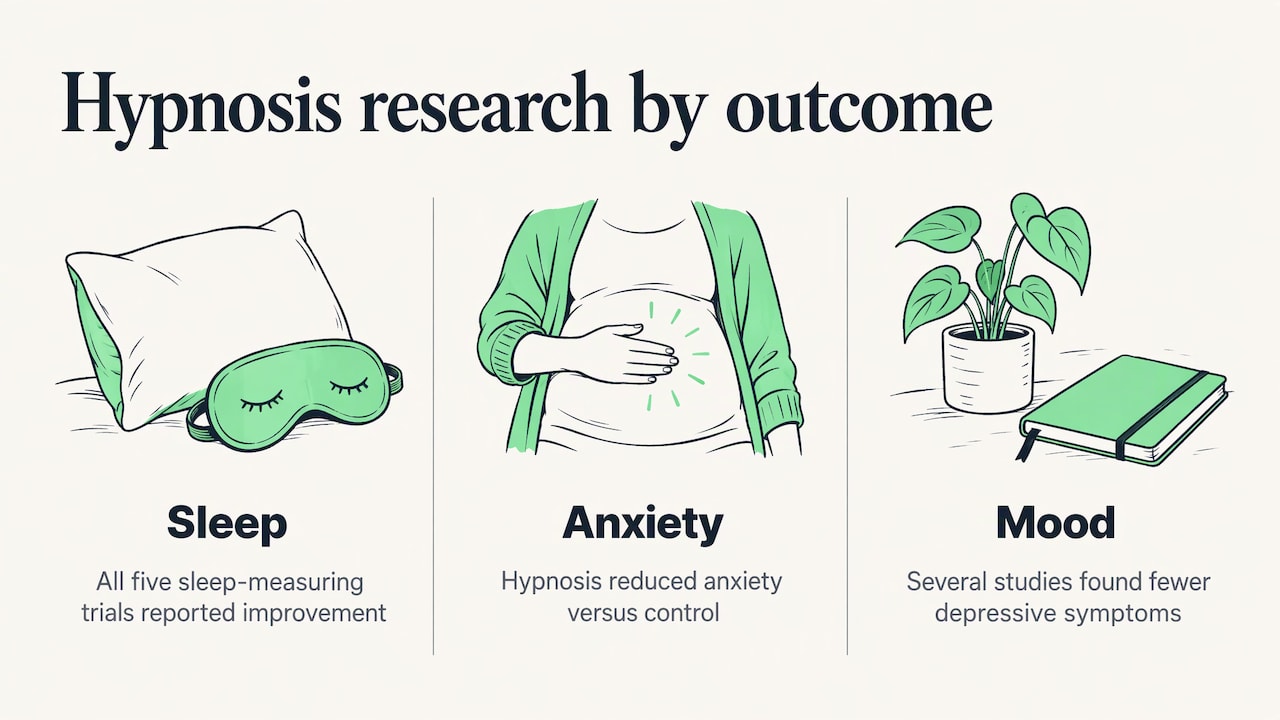
Sleep. All five hypnosis trials in the 2025 scoping review that measured sleep found improved sleep quality. In a 2021 trial of 90 postmenopausal women with poor sleep, a five-week hypnosis program with daily audio practice improved sleep in all four delivery formats (three or five sessions, in person or by phone). The five phone sessions showed a large effect on sleep quality. A report on the same research found clinically meaningful improvement in perceived sleep quality in 50% to 77% of women. If sleep is your main complaint, our page on insomnia hypnosis explains how sessions for sleep usually run.
Anxiety. A randomized controlled trial in postmenopausal women found significant drops in anxiety with a hypnosis program built to reduce hot flashes, and hypnosis beat the control condition. Anxiety also tends to feed hot flashes, so calming the nervous system can help on both fronts. Our guide to stress relief hypnosis covers the calming side of the work.
Mood. Several studies in the scoping review showed reductions in depressive symptoms after hypnosis. That is encouraging, but see the safety section below: when depression is the main problem, it needs its own plan.
Why it might work
Researchers do not yet know the exact mechanism. The authors of the 2013 trial propose that hot flashes may involve lower parasympathetic tone, the part of the nervous system that calms the body, and that regular hypnosis practice may strengthen it. Put simply, you are training your body to settle faster. That is why daily practice is part of every studied program, not an optional extra.
What a course typically involves
The NAMS statement describes the program with the strongest evidence as five weekly in-person sessions with a trained provider, plus daily self-hypnosis practice at home. Here is how that usually looks in practice:
- A first conversation. You describe your symptoms, when they hit, what triggers them and how they affect sleep and work. This sets the goals.
- Learning the state. In the first session you practice relaxing deeply and focusing attention, then try imagery suited to you, such as cool water, wind or snow.
- Building the skill. Over the next sessions the imagery is refined and linked to your real triggers, such as the first warm wave of a flash or the moment you wake at 3 a.m.
- Daily practice. You rehearse the same state at home, typically with a recording from your practitioner. The trials built this in, and so should any course you choose.
- Review. Each week you compare notes, for example a simple diary of flashes and nights, and adjust the plan.
A practitioner matters here because imagery that works for one woman can irritate another. Someone who dislikes cold water needs a different image than someone who loves it, and the sessions are where that gets sorted out. At MindShift we build customized treatment plans, and sessions are available in person or online, which suits a weekly schedule when you cannot travel.
Self-guided audio: what the newer studies found
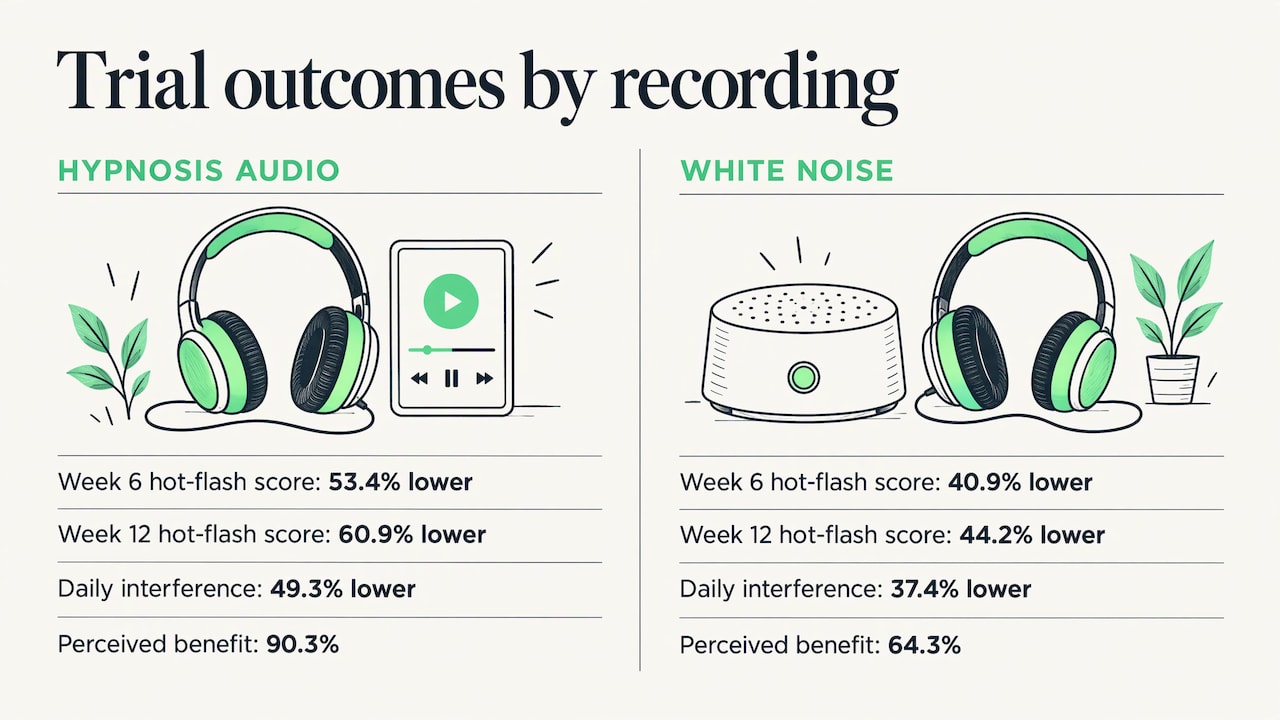
People searching this topic often meet headlines about at-home recordings, so here is what they show. A JAMA Network Open randomized trial of 250 postmenopausal women compared daily 20-minute hypnosis recordings with a white-noise recording. Hot flash scores fell 53.4% at week 6 in the hypnosis group, against 40.9% for white noise, and 60.9% against 44.2% at week 12. Daily interference fell 49.3% against 37.4%, and 90.3% of the hypnosis group reported perceived benefit, against 64.3% in the control group.
In a retrospective look at 410 users of a hypnosis app, 76.3% of women with hot flashes and night sweats reached a reduction of 50% or more.
Two things stand out. First, even the sham recording brought improvement, so relaxation and attention alone help. Second, the largest effects, such as the 74% reduction, came from the program that combined a trained provider with daily practice. If you want the strongest version of the approach, start with a practitioner who tailors the work to you and gives you a recording to use between sessions.
Hypnosis alongside medical care
Hypnosis is a strong option on its own terms, and it fits well in a broader plan. The NAMS statement lists it with CBT, certain antidepressants, gabapentin and fezolinetant as nonhormone options, and notes hormone therapy remains the most effective treatment for vasomotor symptoms. For women who prefer not to use hormones, or cannot, hypnosis gives a drug-free route with Level I support.
The American College of Obstetricians and Gynecologists (ACOG) has also moved in this direction. According to ACOOG’s summary of ACOG Clinical Practice Guideline No. 13, published October 15, 2026 and replacing Practice Bulletin No. 141 from 2014, nonpharmacologic interventions including clinical hypnosis are conditionally recommended for menopause symptoms, generally alongside hormonal or nonhormonal medication. A 2019 review likewise reported a consistent, clinically significant effect of hypnosis on hot flashes.
This is how we think about it at MindShift too: hypnotherapy works best when it sits next to your doctor’s care. Read more about combining hypnotherapy with traditional healthcare.
Using hypnosis safely
- Choose a trained, licensed provider. NCCIH states that hypnosis is generally safe when practiced by trained, licensed health care providers, and that side effects are rare. It also notes that hypnosis might worsen some types of psychological problems, so share your history before you start.
- Tell your doctor. Mention you are starting hypnosis, especially if you are also using hormone therapy or another medication. Keep your regular menopause checkups.
- If depression is your main symptom, see your clinician first. According to the ACOOG summary of the ACOG guideline, patients with major depressive disorder, or whose predominant symptom is depression, should be treated according to depression-management guidelines. Hypnotherapy can support that care. Our page on hypnotherapy for depression explains how, and it works best coordinated with your doctor.
- Report unusual reactions. In one sleep trial, a single hypnosis-related adverse event was recorded, tied to a suggestion about water. If an image bothers you, tell your practitioner and it will be changed.
- Seek urgent care for new symptoms. Heavy or irregular bleeding, chest pain or thoughts of self-harm need a doctor or emergency services, not a hypnosis session.
Who tends to get the most from it
The women in these studies were mostly postmenopausal and had frequent hot flashes. Hypnosis tends to suit you if:
- Hot flashes or night sweats are disrupting your sleep or your workday.
- You want a drug-free option, or you cannot use hormones.
- Stress and anxiety seem to trigger or worsen your flashes.
- You are willing to practice for 10 to 20 minutes a day. The trials’ results rest on that routine.
The 2013 authors note that women in their trial were open to mind-body therapies, so a willingness to try the process helps you settle in. Expectation, however, was not what drove the results.
What to expect on cost and coverage
We do not publish session prices, so the services page is the place to ask about current options. Insurance coverage for hypnotherapy varies by plan and provider, and our explainer on hypnotherapy insurance and CPT 90880 walks through the billing code and what to ask your insurer.
Perspective
When women come to us during menopause, the hot flashes are rarely the whole story. They are lying awake at 3 a.m., dreading a meeting, snapping at people they love and wondering why their body feels unfamiliar.
That is why we pair hypnotherapy with life coaching. The hypnosis gives your nervous system a practiced way to settle. The coaching and strategic planning turn that calm into changes you can keep: a sleep routine, a plan for stressful days, a way to explain to your family what is going on.
The research supports the first half of that approach. Clinical hypnosis is recommended at the highest evidence level for hot flashes, and the best results came from guided sessions combined with daily practice. We build each plan around the person in front of us, and we work alongside your doctor, not in place of one.
If you have been told to just wait it out, know that there are skills you can learn now.
Rachael
Start with a plan built for you
If you want guided support for hot flashes, night sweats, sleep or the anxiety that comes with this stage, MindShift Hypnosis offers personalized hypnotherapy and life coaching, in person and online, with treatment plans customized to your needs. Our approach combines modern hypnotherapy techniques with strategic planning in a safe, supportive setting. You can see the full range on our services page or start from our homepage to book a session.
FAQ
Does hypnosis really reduce hot flashes?
Yes, in controlled trials. In the 2013 study, five weekly sessions plus daily practice reduced hot flash frequency by 74%, against 17% in the control group. NAMS rates clinical hypnosis Level I for vasomotor symptoms. Results vary from person to person, and hypnosis is not a replacement for medical advice.
How many sessions will I need?
The program with the strongest evidence uses five weekly sessions with daily practice at home. A sleep trial found that three or five sessions both improved sleep, with the five-session phone format showing the largest effect. Your practitioner will set a schedule based on your symptoms and goals.
Can I do hypnosis online instead of in person?
Yes. In the 2021 sleep trial, all four formats helped, including sessions delivered by phone. Online sessions are a good fit if travel or a busy week makes weekly visits hard, and MindShift offers both in-person and online services.
Is menopause hypnosis safe?
NCCIH states that hypnosis is generally safe with trained, licensed providers and that side effects are rare. Share your mental health history before you begin, and tell your doctor you are doing it. If depression is your leading symptom, your clinician should guide the main treatment plan.
Can hypnosis help me sleep during menopause?
Research points that way. All five hypnosis trials in a 2025 review that measured sleep found better sleep quality, and 50% to 77% of women in one trial reported clinically meaningful improvement. Sleep-focused sessions often use the same relaxation skills as hot flash work.
Sources
- The 2023 nonhormone therapy position statement of The North American Menopause Society
- Clinical Hypnosis in the Treatment of Post-Menopausal Hot Flashes (2013 randomized trial)
- Clinical Hypnosis and Cognitive Behavioral Therapy for Hot Flashes: scoping review (2025)
- Randomized Trial of a Hypnosis Intervention for Treatment of Hot Flashes in breast cancer survivors
- Hypnosis Intervention for Sleep Disturbance in postmenopausal women
- Self-Hypnosis for Sleep Disturbances in Menopausal Women
- Effect of Hypnosis on Anxiety: Results from a Randomized Controlled Trial
- Self-Administered Hypnosis vs Sham Hypnosis for Hot Flashes (JAMA Network Open)
- Self-Administered Hypnosis vs Sham Hypnosis for Hot Flashes (PMC)
- User Outcomes for an App-Delivered Hypnosis Intervention
- Menopausal Symptoms: In Depth (NCCIH)
- ACOOG Endorses National Guidance on the Management of Menopause
- Complementary and Alternative Medicine for Menopause (2019 review)